
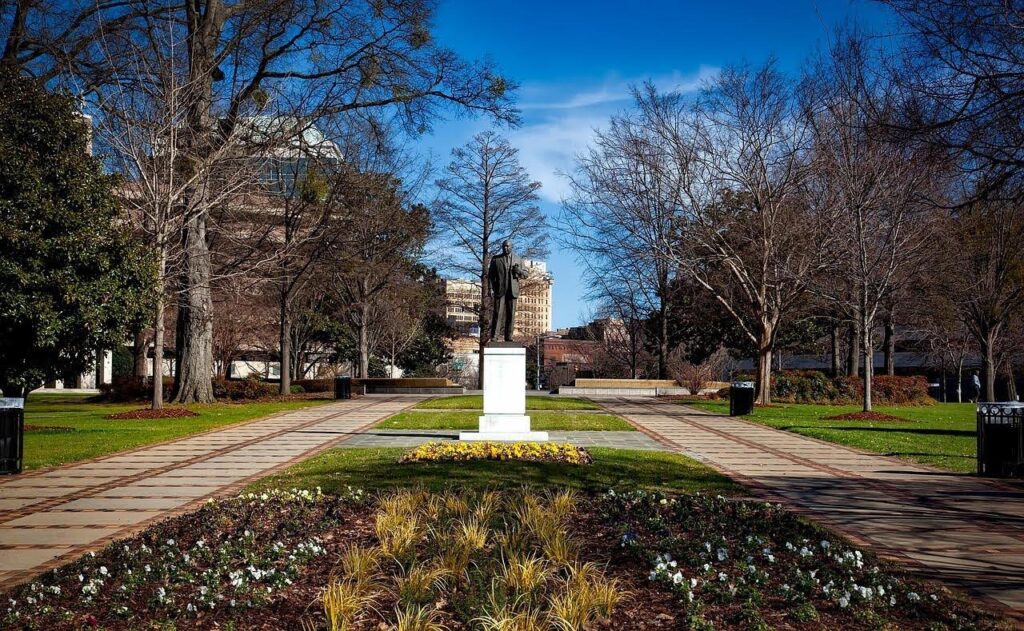
Across Alabama, there are officially 28 recognized Civil Rights landmarks. Each one holds its own story that represents defiance and courage. One of these landmarks is where a bombing took place in 1963 that shocked the world: Birmingham’s 16th Street Baptist Church. Another is the Edmund Pettus Bridge in Selma, which is still known as one of the most powerful symbols of the voting rights movement. Another important landmark is Tuscaloosa’s Foster Auditorium. This is where Autherine Lucy became the University of Alabama’s first black student in 1956 after facing mobs. The history behind these landmarks is not for people to only visit. These are spaces where people stand, listen, and imagine what it was like before such places were ever recognized as Civil Rights landmarks.
What most people didn’t expect was the amount of money that would come from these areas. In just 2024, visitor spending at these landmarks topped $345 million. This is more than any other state has made on the Civil Rights Trail. Yet, this has become a common theme; tax revenue is generated from what few would consider traditionally profitable. Take vending machines and small-scale micro-retail, for example. In some cities, these seemingly minor operations contribute surprisingly high amounts of tax revenue simply by serving everyday convenience needs. And it’s not just vending machines or historic sites. Online casinos have emerged as another unexpected source of tax revenue, funneling millions into state programs. These platforms attract users through convenient play that doesn’t require commuting to a casino. Players get to play a hand of poker or spin slots reels from the comfort of their home. Many of these players use resources like casinobeats’s casino bonus guide to take advantage of the hefty promotions that some of the top sites offer. All three of these examples have proved to be a powerful engine for economic growth.
According to the report, the overall economic effect of Civil Rights tourism in Alabama reaches about $593 million each year. That includes hotel stays, local shops, transportation, and even small-scale events that orbit around major landmarks. It’s not just about numbers. It’s about neighborhoods feeling alive again. A barber shop down the street from a museum sees more walk-ins. A retired teacher opens a café because the traffic finally supports it. The money stays close to where the history happened.
Lee Sentell, director of the Alabama Tourism Department, calls the Civil Rights Trail one of the state’s most powerful storytellers. People don’t arrive here just for photos; they come to feel something. “They leave,” he said, “with a deeper understanding of what equality costs.” He’s right. The experience is emotional, sometimes uncomfortable, but it’s real. And that’s why visitors keep coming.
Birmingham, Montgomery, and Selma have felt the surge most. Birmingham’s Civil Rights District has grown into a centerpiece for cultural travel. Montgomery’s Legacy Museum and the National Memorial for Peace and Justice draw global attention. And Selma, still modest in size, welcomes steady streams of travelers who come to cross the bridge they’ve seen in documentaries and history books. People talk quietly there. It feels less like tourism and more like paying respects.

Preservation work has picked up, too. Restoration crews, local volunteers, and historians have joined forces to protect fragile landmarks. Some sites had fallen into disrepair before tourism brought them back into focus. Now, grants and partnerships are helping rebuild while keeping authenticity intact. There’s an understanding that these are not attractions in the usual sense. They’re testaments. Keeping them true matters more than making them glossy.
Technology has added a new layer. Audio tours, QR codes, and interactive maps have become standard. Students can trace the trail virtually before setting foot in Alabama. It’s a quieter kind of innovation, one that lets people meet the past where they are. Museums have embraced this approach without losing the personal touch that still defines each visit.
In towns connected to the trail, you can see how the benefits spread. Streets get repaved. Old storefronts open again. Local events fill hotels that used to sit half-empty. These aren’t changes that happen overnight, but people notice them. “We finally see folks coming in for something good,” one shop owner told a local paper.
Alabama’s leadership in Civil Rights Trail tourism shows that honoring history doesn’t have to mean leaving it behind. The lessons are still visible on brick walls, bridges, and memorials that stand quietly against the Southern sun. Each visitor adds another thread to a story still being written. And for the people who live near those stories, that attention has become its own kind of hope.
More Stories
APR vs APY in Crypto: What the Numbers Really Mean
Why Creator Platforms Need Better Payment Rails, Not Just More Monetization Features
Why Background Contrast Matters in Slot Gaming Symbol Recognition