
Open my fridge on a Wednesday evening and you will not find a cookbook spread. There might be half a cabbage, three eggs, a tired pepper and several suspicious jars.
This is when an AI recipe assistant makes sense. Type in what you have and it may suggest Japanese okonomiyaki, a frittata or “deconstructed cabbage tacos.” Two ideas will be sensible. One will be boring. The fourth may be odd enough to try.
That slightly chaotic mix of practical help and unexpected inspiration is what makes AI cooking interesting. A computer cannot taste dinner, but it can send a cook in a direction they might never have considered.
The Day a Computer Put Beef and Chocolate in a Burrito
Pinning down the first AI-created recipe is difficult. Early experiments with digital recipe databases often stayed inside laboratories. Computer-generated food first attracted broad public attention in 2014.
IBM’s Watson had already beaten human champions on the television quiz show Jeopardy!. Its next job was rather different: lunch.
For Chef Watson, IBM worked with New York’s Institute of Culinary Education. The system studied tens of thousands of recipes, common ingredient combinations and flavor compounds. It then proposed pairings likely to work but unusual enough to surprise.
The famous result was an Austrian chocolate burrito with beef, dark chocolate, apricot, cinnamon, orange peel, cheese and edamame. It reads like three shopping bags dropped on the floor. Nevertheless, chefs refined and served it from a food truck at South by Southwest.
Watson also proposed a Vietnamese apple kebab with pork, apple, mushrooms and strawberries. Pastry chef Michael Laiskonis admitted he would not have invented that pairing. Once tested, it worked.
That detail matters. Watson did not stride into the kitchen, tie on an apron and produce a finished dish. It threw an unusual idea across the counter. A human chef caught it, tasted it and decided what to keep.
What Happens Between the Question and the Recipe?
AI does not imagine food in the way we do. It has never stood beside a barbecue or stolen a crisp potato from a roasting tray. It works with patterns.
Older systems examined recipe collections, learning which ingredients appeared together and how dishes were structured. Some also used aroma data. They generated combinations, then ranked them for familiarity, novelty or likely appeal.
Today’s language models learn recipe patterns from huge quantities of text. Ask for “dinner for two using eggs, canned tomatoes and cumin,” and the model recognizes shakshuka. Mention a gluten-free diner and it adjusts the suggestion. Ask for beginner-friendly steps and the tone changes.
The catch: it writes what a believable recipe looks like but never tastes it. Polished instructions can still contain too much salt or leave dinner half raw.
| Kitchen task | What AI can contribute | What the cook still has to do |
| Using leftovers | Find patterns and suggest several possible dishes | Check that the ingredients are still fresh |
| Replacing an ingredient | Offer alternatives for diet, taste or availability | Decide whether the texture and cooking method still work |
| Creating a new dish | Produce unusual pairings very quickly | Cook, taste and probably revise them |
| Planning a menu | Balance courses, budgets and stated preferences | Understand the guests and the occasion |
| Food safety | Repeat established general guidance | Verify temperatures, allergens and risky techniques using trusted sources |
Do Professional Chefs Actually Use It?
Yes, although “use” is not the same as “obey.”
Watson’s chefs treated the computer as a brainstorming partner. Sony AI later explored a similar project, involving acclaimed Japanese chef Hajime Yoneda and presenting an early concept at Madrid Fusión.
Sony’s tool was designed to study aroma, molecular structure, pairings, health and sustainability: a kitchen colleague with a gigantic memory but no palate.
That is AI’s realistic restaurant role. A chef requests ten ideas for beetroot and coffee. Eight go in the bin, one is impractical and the last sparks a different dish. The machine interrupts familiar habits.
At home, personality can make the advice easier to follow. Someone using an AI character generator could create a calm virtual instructor, an enthusiastic street-food fan or a blunt kitchen companion who explains one step at a time. When both hands are covered in flour, asking “Does this dough look too wet?” feels more natural than scrolling through six paragraphs on a phone.
Two Good Recipes for an AI-Assisted Weeknight
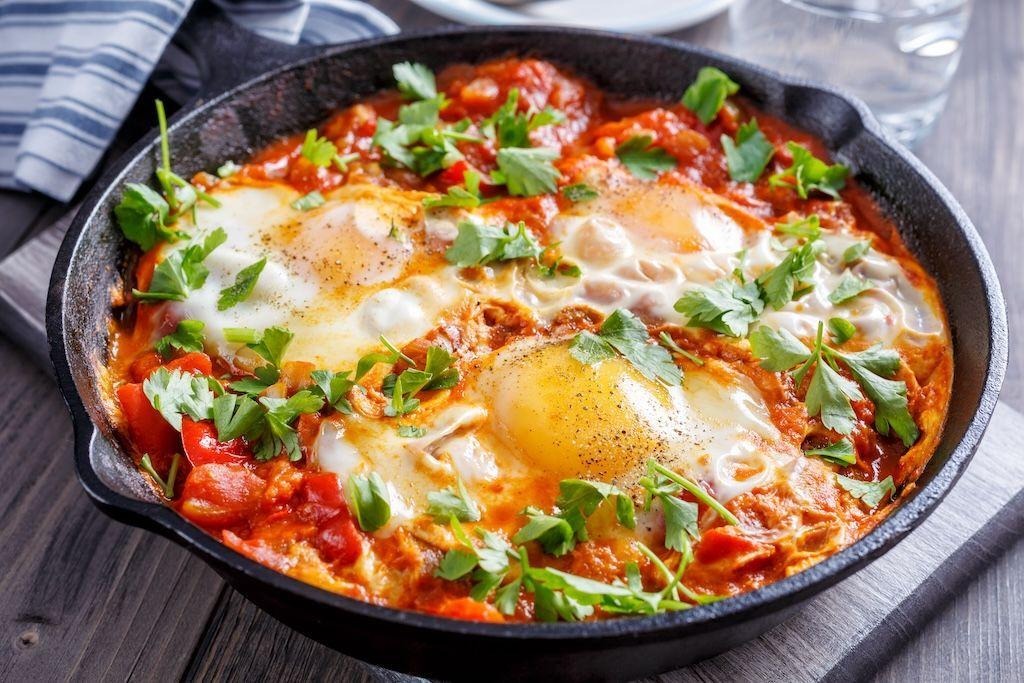
Shakshuka from the Back of the Cupboard
Shakshuka is forgiving and built around ingredients that keep well. It has North African roots and is eaten across the Middle East and beyond. Its name is often interpreted as “a mixture,” fitting a dish with countless versions.
Soften one diced onion and one red pepper in olive oil. Add two chopped garlic cloves, a teaspoon of cumin and a teaspoon of paprika. Pour in a 400-gram can of tomatoes, season and simmer until the sauce thickens.
Make four small wells and crack an egg into each one. Cover the pan and cook gently until the whites set while the yolks remain soft. Add parsley and bring the skillet to the table with bread. Feta, spinach, chickpeas or a spoonful of harissa can all join in without causing an international incident.
Okonomiyaki When the Fridge Looks Empty
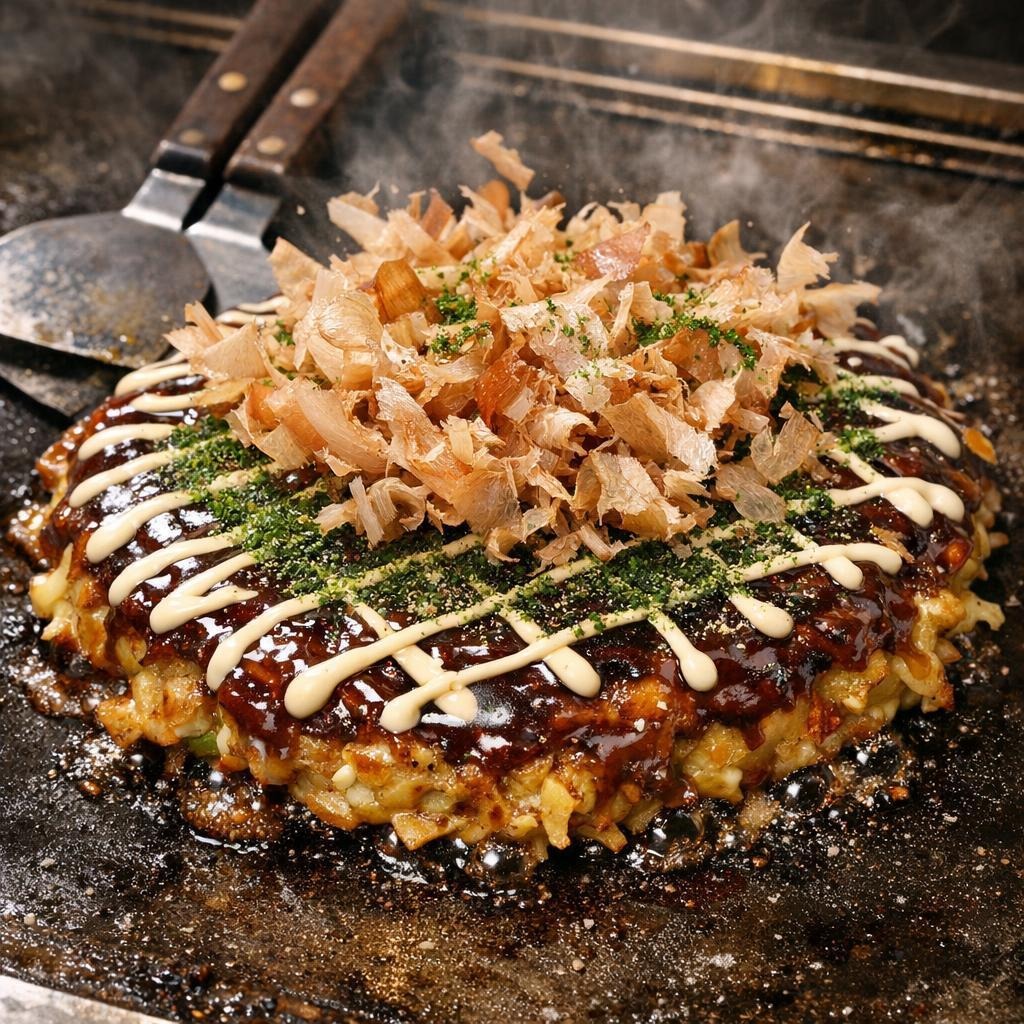
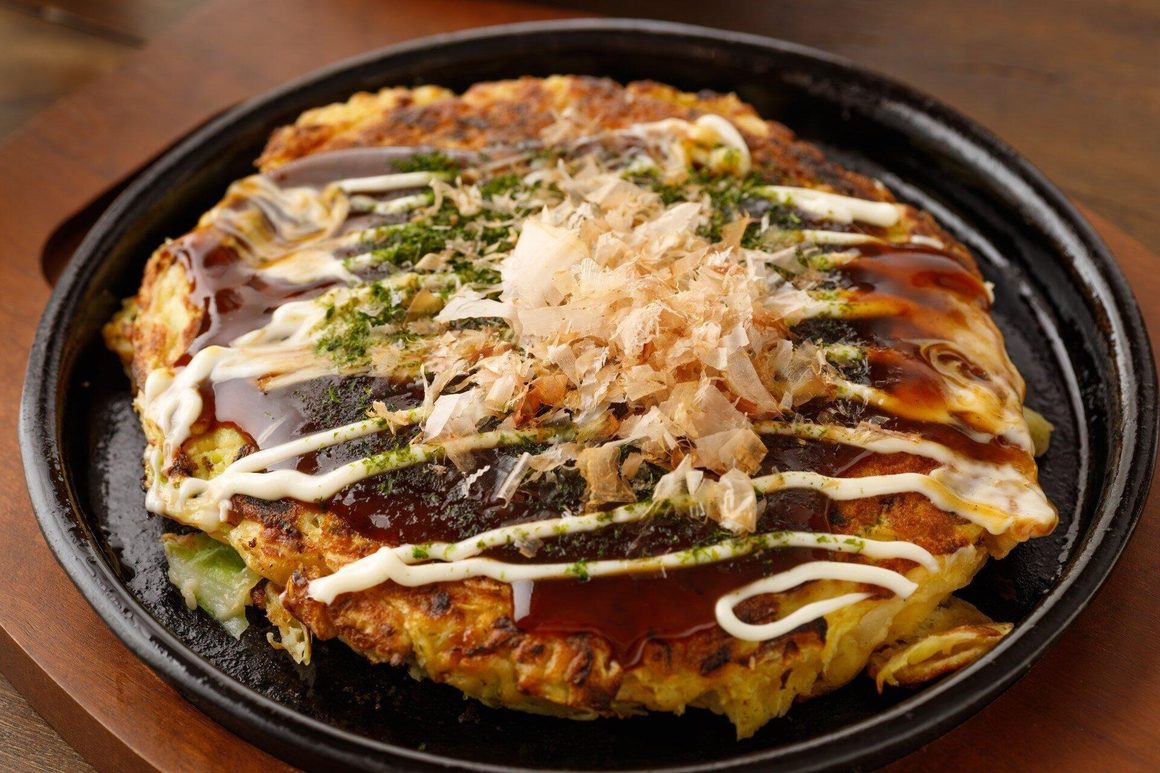
Okonomiyaki is usually called a Japanese savory pancake. Its name roughly combines “what you like” and “grilled.” Customization is not a compromise; it is the point.
Mix three-quarters of a cup of flour with two eggs, half a cup of water or light dashi and a pinch of salt. Fold in two cups of finely shredded cabbage and two sliced scallions. Add mushrooms, shrimp, cheese or thin pork slices if they are available.
Cook the mixture as two thick pancakes in a lightly oiled pan, giving each side four or five minutes. Finish with mayonnaise and okonomiyaki sauce. Bonito flakes are a popular topping. The heat makes these paper-thin pieces curl and wave, so they appear to dance on the plate. They are not alive, despite what a startled first-time diner may think.
Keep One Hand on the Spatula
Some jobs should not be handed to a chatbot. Canning, fermentation, wild mushrooms, allergies and raw meat leave little room for guessing. AI may also mistake one regional recipe for the only “authentic” version.
Use it as you would use an imaginative friend who has read every cookbook in the library but somehow missed dinner. Ask for ideas. Let it rescue the cabbage. Laugh at the chocolate burrito, then admit that you are curious.
Just remember who has the working taste buds. The computer can search thousands of possibilities before the onions begin to soften. Only the person beside the stove can decide whether the sauce needs lemon, whether the strange pairing actually works and whether anyone at the table wants a second helping.
More Stories
OneWorldPlate: The Practical Guide To Sustainable, Portable Tableware In 2026
OneWorldPlate Miramar Moving Company: The Local Guide To A Stress‑Free Move In 2026
12948 Dolimen Lane, Kolnem NC 28173: Property & Neighborhood Snapshot (2026 Guide)